In India, astrology and faith often go hand in hand. Among the many astrological terms we hear, Kaal Sarp Dosh is one that sparks both curiosity and concern.
People often hear about it during family discussions or from priests, but few truly understand what it means. This blog will help you learn (in simple language) what Kaal Sarp Dosh is, how it forms, and what signs are often linked to it according to Vedic astrology.
In sacred cities like Ujjain, devotees perform Kaal Sarp Dosh Puja to reduce its influence and seek peace.
At Puja Anushthan, these rituals are performed by experienced Pandits following traditional Vedic procedures, helping devotees connect with spirituality in an authentic way.
What is Kaal Sarp Dosh in astrology
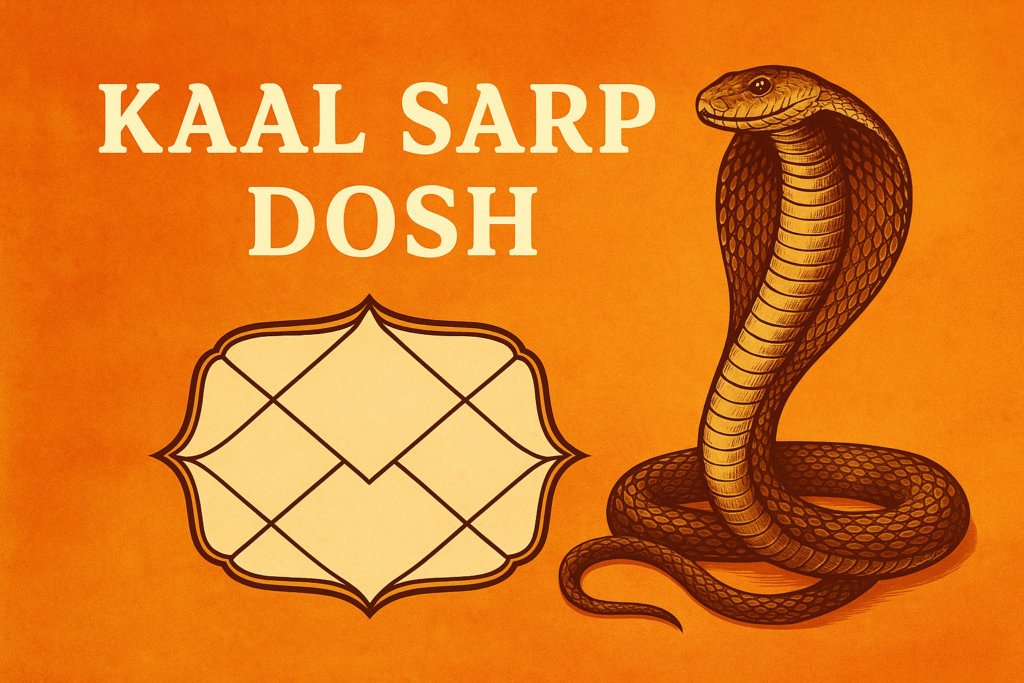
In Vedic astrology, Kaal Sarp Dosh occurs when all seven planets ( Sun, Moon, Mars, Mercury, Jupiter, Venus, and Saturn ) are positioned between Rahu and Ketu, also known as the shadow planets.
- “Kaal” means time
- “Sarp” means serpent
So, Kaal Sarp represents the “serpent of time”, symbolizing karmic energy and spiritual lessons.
Astrologically, this alignment is believed to indicate karmic blockage: a situation where life’s flow feels restricted. However, not everyone with this dosh faces the same challenges. Its influence depends on the strength of other planets and their placement in the Kundli.
How Kaal Sarp Dosh forms in a Kundli
This dosh is formed when all the planets fall on one side of the Rahu–Ketu axis.
Key things astrologers generally observe
- Position of Rahu and Ketu: they always sit opposite each other
- House placement: the houses Rahu and Ketu occupy influence specific life areas
- Support from benefic planets: strong Jupiter or Venus placements may reduce its effects
The intensity varies from person to person. It’s not always negative. Many people with this alignment lead peaceful and successful lives.
How to recognize Kaal Sarp Dosh: common signs and life patterns
Astrologers associate certain mental, emotional, and situational patterns with Kaal Sarp Dosh.
These are belief-based, not scientific symptoms; so they should be seen as spiritual indicators, not health issues.
Physical and psychological indicators
People said to have Kaal Sarp Dosh may experience:
- Constant restlessness or anxiety without visible reason
- Disturbed sleep or recurring dreams involving snakes
- Sudden fear or insecurity about future outcomes
- Overthinking or mental fatigue
These signs are symbolic of how the shadow planets Rahu and Ketu influence inner peace.
Emotional and spiritual tendencies
Many feel:
- Emotionally drained even after small challenges
- A sense of being “stuck” or unable to move forward
- Strong introspection (desire to pray, meditate, or visit temples)
- Sudden spiritual awareness or realization after life obstacles
Astrologers interpret this as a spiritual awakening phase, where karmic lessons surface for growth and balance.
How Kaal Sarp Dosh reflects in everyday life
In relationships or marriage
- Delay in marriage or frequent disagreements
- Emotional distance or trust gaps between partners
- A pattern of short-lived relationships
In career or business
- Hard work not giving expected results
- Delayed success or instability in career
- Sudden financial gains followed by setbacks
In children or teenagers
- Fear of darkness or loneliness
- Mood swings or lack of focus
- Difficulty in expressing emotions
These experiences differ for everyone. The presence of Kaal Sarp Dosh doesn’t mean life will always be difficult. It’s simply seen as a karmic alignment that teaches patience and strength.
Effects of Kaal Sarp Dosh on overall life balance
Astrology texts often mention the following general effects:
- Life-pattern disruptions: Unexpected changes or reversals after success
- Karmic lessons: Facing repetitive challenges until spiritual maturity grows
- Inner transformation: Learning humility, patience, and surrender
Interestingly, many spiritual practitioners believe that people with this dosh often develop deep intuition and empathy, as their challenges turn into wisdom.
Is Kaal Sarp Dosh always bad? Myths and realities
Let’s break a few popular myths surrounding this topic.
| Myth | Reality |
| It’s a curse that destroys life. | It’s an astrological alignment — a karmic phase, not a curse. |
| Everyone with it suffers. | Its impact depends on planetary strength and life choices. |
| It cannot be reduced. | Faith, puja, and good deeds can help balance its energy. |
The truth: Kaal Sarp Dosh is not something to fear. It is seen as a phase of karmic awareness, leading to spiritual growth.
Remedies for Kaal Sarp Dosh
While one cannot “remove” a planetary alignment, spiritual remedies are followed to balance its effects.
Common practices include:
- Kaal Sarp Dosh Puja; performed in sacred cities like Ujjain or Trimbakeshwar
- Worship of Lord Shiva and Nag Devta
- Mantra chanting and meditation
- Charity and donations to support positive karma
At Puja Anushthan, devotees can perform authentic Kaal Sarp Dosh Puja in Ujjain, guided by experienced Vedic Pandits who follow traditional rituals.
These pujas are conducted peacefully and as per scriptural methods, allowing devotees to seek blessings with faith and devotion.
Frequently Asked Questions
If all seven planets are positioned between Rahu and Ketu in your birth chart, astrologers believe this forms Kaal Sarp Dosh. It’s best confirmed by someone familiar with Vedic astrology.
Many astrologers associate it with delays or obstacles in marriage, career, or recognition. But its effect varies based on individual planetary strength.
The alignment itself cannot be removed, but its effects can be balanced through puja, prayer, and spiritual practices like Kaal Sarp Dosh Puja.
Holy cities like Ujjain are considered spiritually powerful for this puja.
At Puja Anushthan, devotees perform this ritual under the guidance of experienced Pandits following Vedic traditions.
Conclusion
Kaal Sarp Dosh is one of the most discussed concepts in astrology: not as a curse, but as a reminder of karmic learning and self-awareness.
It may bring challenges, but also inspires strength, discipline, and spiritual insight.
For many devotees, performing Kaal Sarp Dosh Puja in Ujjain becomes a path to inner peace and renewal.
If you wish to know more or seek guidance about performing this puja with authentic Vedic rituals,
Contact Us at Puja Anushthan, where our experienced Pandits perform this ceremony in Ujjain with devotion and care.
Key Takeaways
- Kaal Sarp Dosh forms when all planets lie between Rahu and Ketu
- It represents karmic learning, not misfortune
- Common signs include delays, emotional restlessness, and recurring life challenges
- Remedies focus on balance (especially through Kaal Sarp Dosh Puja)
- Performed with faith, these rituals help devotees move forward with peace and positivity