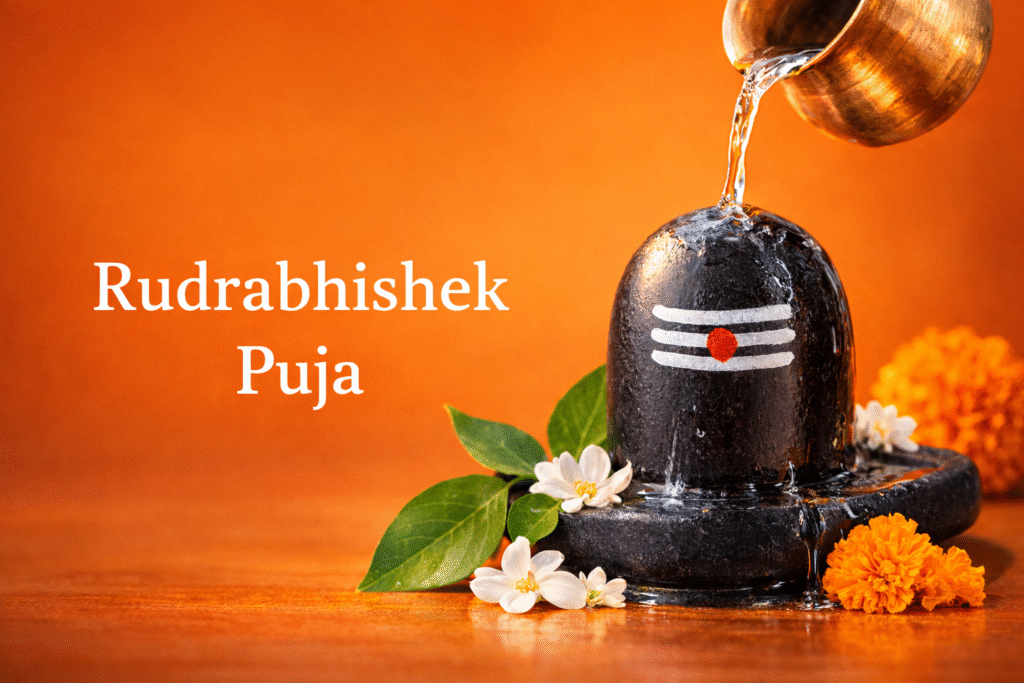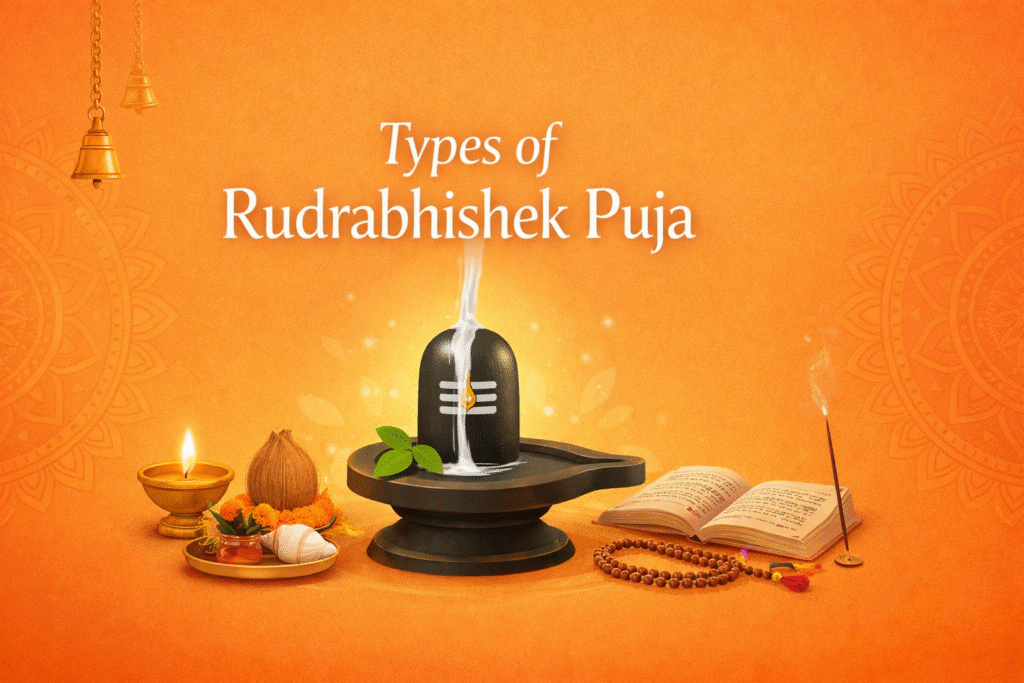
Rudrabhishek Puja is a sacred ritual dedicated to Lord Shiva, where devotees offer holy liquids such as water, milk, curd, and honey to the Shivling while chanting Vedic mantras. This ritual has been practiced for centuries and continues to be an important part of Shiva worship in Hindu tradition.
Many people often hear about different types of Rudrabhishek and feel confused. Are these different rituals? Do they require different methods? Or are they simply variations of the same puja?
The truth is simple.
Rudrabhishek Puja is one ritual, but it is performed at different levels based on the scale of chanting and the depth of the process. These levels are what we call the types of Rudrabhishek.
In this guide, you will clearly understand what these types mean, why they exist, and how to choose the right one for your needs.
What Are the Types of Rudrabhishek Puja?
Rudrabhishek Puja has four main types, Laghu Rudra, Ekadash Rudra, Maha Rudra, and Ati Rudra, which differ based on the number of mantra recitations and the scale of the ritual.
Types of Rudrabhishek Puja refer to different levels of the same ritual, based on how many times the Vedic mantras are chanted and how large the puja is performed.
Each of these types represents a different level of chanting and ritual scale, while the core process remains the same.
As the level increases, the ritual becomes more elaborate and takes more time.
Why Are There Different Types of Rudrabhishek?
Rudrabhishek is based on Vedic chanting, especially the recitation of the Rudra Path. In Vedic tradition, chanting is often done in structured repetitions.
Because of this structure, the same ritual can be performed at different levels.
At a basic level, the chanting is done a limited number of times. As the level increases, the same chants are repeated multiple times, making the ritual more detailed and extended.
This is why different types of Rudrabhishek exist.
A smaller ritual is suitable for personal worship, while a larger one is chosen for important occasions or deeper spiritual practices.
Types of Rudrabhishek Based on Offerings (Dravya-Based Abhishek)
Apart from the traditional types based on chanting, Rudrabhishek can also be understood based on the type of offerings used during Abhishek.
In Hindu tradition, different liquids are offered to the Shivling with specific intentions. These offerings are known as dravya, and each has its own symbolic meaning.
Jal Abhishek is associated with purity and peace. It is the most basic and widely practiced form of Shiva worship.
Milk Abhishek is linked with calmness and mental balance. Many devotees offer milk while praying for emotional stability.
Curd (dahi) is also used in some rituals and is connected with nourishment and steadiness in life.
Ghee Abhishek is associated with strength and continuity. It is usually part of more traditional and structured rituals.
Honey Abhishek represents sweetness and harmony. It is often offered with prayers for better relationships and positivity.
Sugarcane juice is used in certain traditions and is connected with prosperity and comfort.
Panchamrit Abhishek involves a mixture of milk, curd, honey, ghee, and sugar, and is considered a complete offering.
Bhasma Abhishek uses sacred ash and reflects spiritual awareness and detachment.
It is important to understand that these are not separate rituals. They are part of the same Rudrabhishek process, where the intention behind the offering matters the most.
Types of Rudrabhishek Puja Explained in Simple Terms
Now let us understand each type in a simple and practical way.
Laghu Rudrabhishek Puja (Basic Level)
Laghu Rudrabhishek is the most commonly performed form of Rudrabhishek. It is suitable for individuals and families who want to perform Shiva worship in a simple and meaningful way.
In this type, the Laghu Rudra Path is recited, and the Abhishek is performed with sacred liquids such as water, milk, curd, and honey. The chanting of laghu rudra mantra is done in a structured format but at a smaller scale.
Because the ritual is not very elaborate, it can be performed more frequently and is ideal for personal devotion.
This form of Rudrabhishek is traditionally associated with a sense of peace, emotional balance, and stability in daily life. Many devotees choose this type for regular spiritual practice.
To understand the deeper spiritual impact of this ritual, you can explore more about rudrabhishek puja benefits, which explain how this practice supports overall well-being.
Ekadash Rudrabhishek (Intermediate Level)
Ekadash Rudrabhishek is the next level after Laghu Rudra. The word “Ekadash” means eleven, which refers to the structured repetition used in this ritual.
In this type, the chanting is done multiple times, making the ritual more detailed than Laghu Rudra. The process remains the same, but the level of repetition increases.
Ekadash Rudrabhishek is often performed during special occasions or when families want to perform a more meaningful ritual.
Maha Rudrabhishek Puja (Advanced Level)
Maha Rudrabhishek Puja is a more elaborate form of the ritual. In this type, chanting is performed at a larger scale and usually involves multiple priests.
The ritual takes more time and requires more preparation compared to smaller forms.
Because of its scale, Maha Rudrabhishek is often performed during important life phases or significant family events.
This form of Rudrabhishek is associated with seeking strength, stability, and clarity during challenging situations.
Ati Rudrabhishek Puja (Highest Level)
Ati Rudrabhishek is the most extensive form of Rudrabhishek. It is performed at a very large scale and involves a high level of chanting.
This type of ritual is usually conducted in temples or during large spiritual events.

Key Differences Between Different Types of Rudrabhishek
| Type | Scale | Chanting Level | Duration | Best For |
| Laghu Rudra | Small | Basic | Short | Personal worship |
| Ekadash Rudra | Medium | Moderate | Medium | Family rituals |
| Maha Rudra | Large | High | Long | Major occasions |
| Ati Rudra | Very Large | Very High | Extended | Temple-level rituals |
The difference between these types lies in the scale of chanting, duration, and number of participants, while the core ritual remains the same.
Which Type of Rudrabhishek Puja Should You Choose?
Choosing the right type of Rudrabhishek depends on your intention and situation.
If you are looking for a simple and regular form of worship, Laghu Rudra is usually sufficient. For family rituals or special occasions, Ekadash Rudra is often preferred.
Maha Rudra is generally chosen during important life phases, while Ati Rudra is suitable for large-scale or temple-based rituals.
It is important to remember that the effectiveness of the ritual does not depend on its size. The devotion and sincerity with which it is performed matter the most.
For those who prefer a temple-based experience, performing rudrabhishek puja in Ujjain is often considered a meaningful option due to its spiritual importance.
Why Many Devotees Prefer Performing Rudrabhishek in Ujjain
Ujjain is one of the most sacred cities for Shiva worship. It is home to the Mahakaleshwar Jyotirlinga, which holds great importance in Hindu tradition.
Because of this, many devotees feel that performing rudrabhishek puja in Ujjain provides a deeper spiritual experience.
The presence of experienced priests, temple rituals, and the overall spiritual environment makes the puja feel more complete and traditional.
Important Things to Know Before Choosing a Rudrabhishek Type
Before selecting a type of Rudrabhishek, it is important to understand a few simple points.
The ritual itself remains the same in all types. Only the scale changes. Not everyone needs a large-scale puja, and in many cases, a simple form of worship is enough.
Personal devotion, intention, and consistency play a more important role than the size of the ritual.
Common Questions About Types of Rudrabhishek Puja
The chanting used in Rudrabhishek comes from Vedic scriptures. The different types are based on how these chants are structured and repeated.
The duration depends on the type. Smaller rituals may take a few hours, while larger ones can take longer.
Yes, many devotees perform Rudrabhishek regularly, especially on Mondays or during Shravan month.
Basic preparation includes cleanliness, arranging puja items, and maintaining focus during the ritual.
No, smaller types can be performed with fewer priests, while larger ones require more participants.
Sankalp represents the intention behind the ritual and is considered an important part of the puja.
Yes, many families perform the ritual together, especially during important occasions.
Final Thoughts on Understanding Types of Rudrabhishek Puja
Rudrabhishek Puja is a deeply meaningful ritual that has been followed in Hindu tradition for centuries. While the different types may seem complex at first, they are simply different levels of the same practice.
The essence of the ritual lies in devotion, not in the scale of the puja.
Whether performed at a small level or a large one, Rudrabhishek remains a powerful way to connect with Lord Shiva and maintain spiritual balance in life.